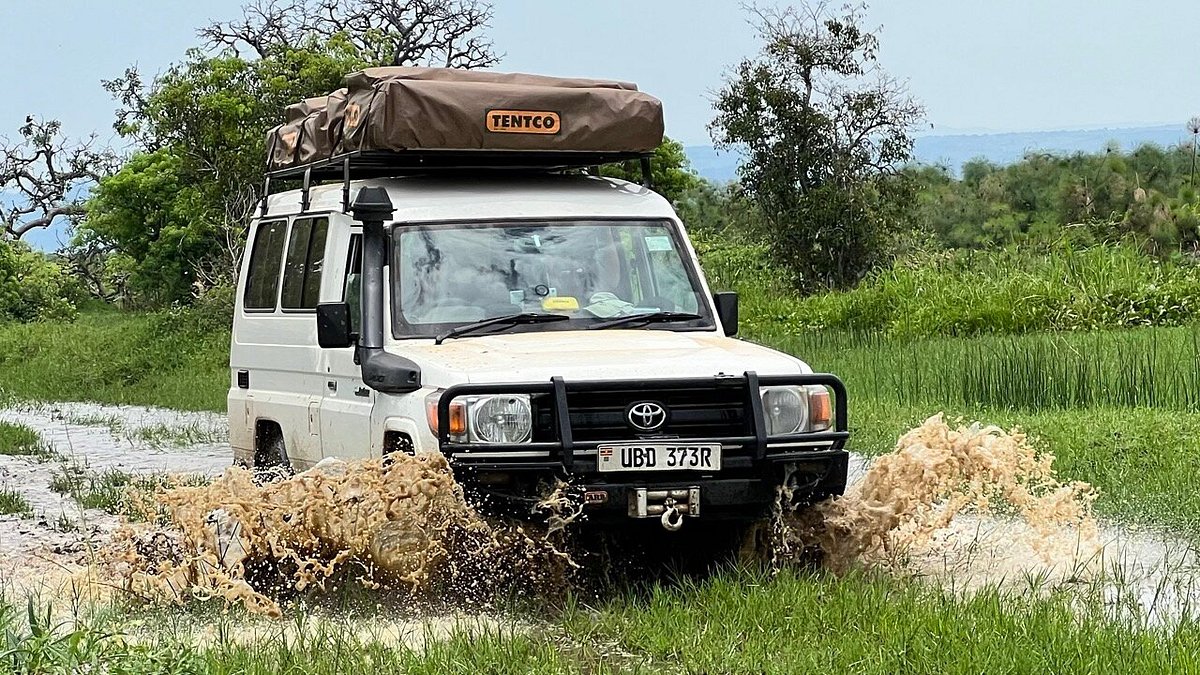
Uganda’s road trip landscapes are changing. Reliable safari routes now face intense rainfall, heat, and eroded tracks, along with unpredictable wildlife, making climate awareness crucial for travelers. Climate change is redefining journeys, but it is not a reason to postpone travel. Instead, it’s a reason to travel wisely. Hiring a 4×4 vehicle in Uganda enables autonomy, adaptability, and assurance to explore responsibly, matching the country’s shifting environment.
For travelers planning self-drive adventures in Uganda, climate awareness is no longer optional. It is part of responsible preparation. Uganda is highly exposed to climate risks, including floods, droughts, heat stress, and infrastructure pressure. The World Bank’s Uganda Country Climate and Development Report notes that Uganda faces serious threats from droughts and floods and ranks among the world’s most climate-vulnerable countries.
Changing Rainfall and Road Accessibility
Road trips in Uganda depend heavily on seasonal conditions. Many major routes are paved, especially highways from Kampala or Entebbe to Mbarara, Fort Portal, Masindi, Gulu, Kabale, and Kisoro. However, the final approaches to several safari destinations often involve murram roads, park tracks, steep escarpments, forest-edge routes, and rural community roads.
Climate change is making rainfall less predictable. Heavy downpours can wash away sections of road, create deep gullies, trigger landslides, and turn feeder roads into slippery, clay-like surfaces. This is especially noticeable in mountainous and forested regions such as Bwindi, Mgahinga, Rwenzori, Mount Elgon, and parts of western Uganda.
For a self drive Uganda traveler, this means itinerary planning must become more flexible. A route that appears short on the map may take much longer after heavy rain. A scenic track may require a strong 4×4 vehicle, experienced handling, and extra daylight hours. The German-supported Climate Risk Profile for Uganda warns that extreme weather can significantly affect transport infrastructure, with floods damaging roads and high temperatures accelerating the deterioration of roads, bridges, and protective structures.
Bwindi, Mgahinga, and the Future of the Gorilla Trek
Few experiences in Uganda are as emotionally powerful as a gorilla trek in Bwindi Impenetrable National Park or Mgahinga Gorilla National Park. The journey itself is part of the enchantment. Travelers drive through terraced hills, tea plantations, banana gardens, forest-edge communities, and mist-covered ridgelines before entering one of the world’s most precious mountain gorilla habitats.
But climate change places new pressure on these ecosystems. Mountain gorillas depend on cool, biodiverse montane forests. As temperatures rise and rainfall patterns shift, plant distribution, fruiting cycles, and forest composition may change. This can affect feeding behavior, movement patterns, and the general ecological balance that supports gorilla families.
A gorilla safari may still feel timeless to the visitor, but the habitat behind that experience is not static. Trail conditions can become muddier after heavy rain. Steeper slopes may become harder to navigate. Trekking duration can vary more widely if gorilla groups move in response to food availability, temperature, or human activity around forest edges.
This does not reduce the value of gorilla tourism. It increases it. Permit revenue, community employment, ranger patrols, conservation education, and responsible visitor behavior all help protect fragile habitats. The Uganda Wildlife Authority identifies climate change, habitat degradation, invasive species, and other pressures as threats to wildlife estates and the survival of wildlife habitats.
Queen Elizabeth National Park and Shifting Wildlife Patterns
Queen Elizabeth National Park is one of the most popular destinations for road trippers, offering game drives in Kasenyi, boat cruises on the Kazinga Channel, crater landscapes, birding areas, and the famous Ishasha sector known for tree-climbing lions.
Climate change can alter the rhythm of this destination. During prolonged dry spells, wildlife may concentrate around remaining water sources, making some sightings easier but increasing pressure on fragile grazing areas. During unusually wet periods, animals may disperse widely, tracks may become difficult to follow, and some low-lying areas may flood.
The Kazinga Channel depends on healthy wetland and lake systems. Changes in rainfall, water levels, sedimentation, and surrounding land use can affect birdlife, hippo populations, fish breeding grounds, and the overall appeal of boat-based safaris. Travelers visiting Uganda’s national parks must understand that wildlife viewing is increasingly shaped by ecological fluctuations, not only by traditional dry- and wet-season expectations.
Murchison Falls and the Nile Corridor
Murchison Falls National Park remains a classic road trip destination, especially for travelers combining Ziwa Rhino Sanctuary, the Top of the Falls, northern bank game drives, and a Nile boat cruise. The route from Kampala or Entebbe to Murchison is usually manageable, but heavy rain can affect smaller access roads, community routes, and game tracks inside or around the park.
The Nile gives Murchison its grandeur. It also makes the park sensitive to hydrological change. Shifts in rainfall intensity can influence river flow, vegetation, animal distribution, and the visitor experience along riverbanks. Heavier rain may cause erosion and road damage, while hotter, drier periods may place additional stress on wildlife and vegetation.
For self-drive Uganda itineraries, Murchison remains rewarding, but travelers should avoid rushing. Extra time should be built into the plan, especially when connecting onward to Kibale Forest, Fort Portal, or northern Uganda.
Kidepo Valley and Drought Pressure
Kidepo Valley National Park is one of Uganda’s most dramatic wilderness landscapes. Its remote location, semi-arid savannah, rugged valleys, and wide skies make it ideal for adventurous road trippers. Yet climate stress can be particularly visible in dryland ecosystems.
Longer droughts may reduce pasture quality, shrink seasonal water sources, and increase competition between wildlife, livestock, and surrounding communities. When grasslands become stressed, grazers may move differently, predators may follow shifting prey, and fire risks may increase.
For visitors, this means Kidepo can feel different from season to season. Some periods may offer extraordinary wildlife concentrations near water points. Others may reveal the harsher side of climate vulnerability. Responsible travel to Uganda national parks like Kidepo should therefore support conservation, local employment, and low-impact tourism rather than extractive, rushed visitation.
Kibale Forest, Chimpanzees, and Forest Microclimates
Kibale Forest National Park is famous for chimpanzee tracking, rich birdlife, butterflies, monkeys, and the nearby Bigodi Wetland Sanctuary. The road journey from Fort Portal or Queen Elizabeth is scenic, passing crater lakes, farmland, tea estates, and forest patches.
Climate change can affect forests in subtle but serious ways. Changes in rainfall and temperature can influence fruiting seasons, insect abundance, wetland health, and primate feeding patterns. Forest roads may become slippery after heavy rain, and wetland boardwalks or community trails may require additional maintenance.
The Climate Risk Profile for Uganda highlights that rising temperatures and drought can place wetlands, riverine systems, forests, and species habitats under pressure. It also notes that climate change may affect the ecology and distribution of tropical ecosystems.
Rwenzori, Mount Elgon, and Mountain Road Risks
Mountain destinations are among the most vulnerable road trip areas. The Rwenzori region and Mount Elgon area offer dramatic scenery, waterfalls, hiking routes, coffee communities, and cultural landscapes. However, steep slopes and intense rainfall increase the risk of landslides, road collapse, flooding, and delayed transfers.
Travelers should avoid treating mountain routes as simple drives. These are living landscapes where the weather can change quickly. A clear morning may become a stormy afternoon. A rural road may be passable one day and difficult the next. Climate-conscious planning means traveling with patience, checking local conditions, using suitable vehicles, and respecting the guide’s advice.
What Climate Change Means for Road Trip Planning
Climate change does not mean travelers should avoid Uganda. It means they should travel more intelligently.
A strong road trip plan should include buffer time, especially when visiting remote or mountainous destinations. A 4×4 vehicle is highly recommended for routes to Bwindi, Kidepo, Queen Elizabeth’s Ishasha sector, Lake Bunyonyi, and off-main-road safari lodges. Travelers should also carry enough water, avoid night driving, monitor weather updates, and choose lodges that demonstrate environmental responsibility.
A well-planned self-drive Uganda safari can still be magnificent. In fact, it can become more meaningful. Every route reveals the connection between climate, communities, wildlife, and tourism income.
Responsible Travel Is Part of the Solution
The future of Uganda’s road trip destinations depends on conservation-minded tourism. Visitors who pay park fees, book local guides, support community experiences, reduce plastic waste, respect speed limits in wildlife areas, and choose eco-conscious lodges help sustain the landscapes they came to enjoy.
The Uganda Wildlife Authority’s strategy emphasizes ecosystem resilience, community livelihoods, and effective management of protected areas as key priorities. These priorities matter because climate change is not only an environmental issue. It is also a tourism issue, a community issue, and a road access issue.
Uganda remains one of Africa’s most rewarding road trip countries. Its beauty is still abundant. Its parks are still captivating. A gorilla trek still has the power to humble even the most seasoned traveler. But the journey now asks for greater awareness. To explore Uganda’s national parks responsibly is to understand that every road, forest, wetland, savannah, and mountain trail is part of a changing climate story.
The best travelers will not simply pass through these landscapes. They will help protect them.